
Sub-Total: $0.00
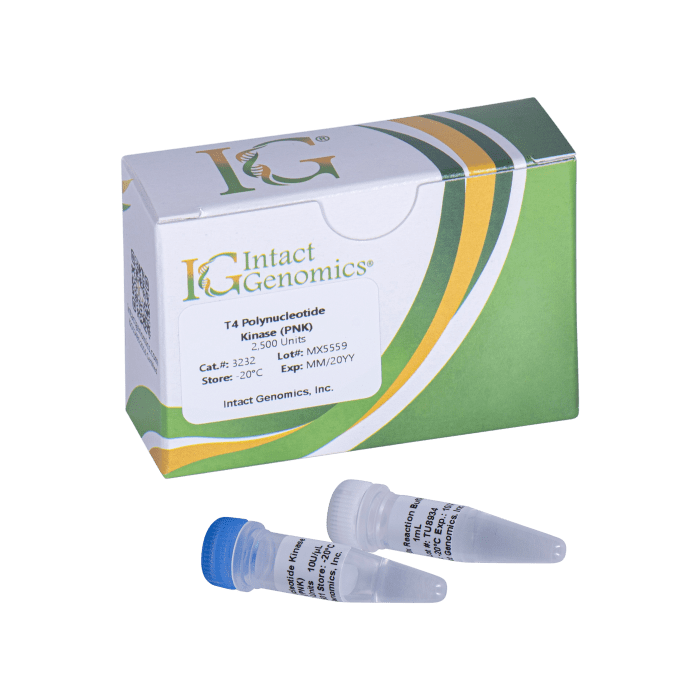
T4 Polynucleotide Kinase (PNK)
T4 Polynucleotide Kinase (PNK) catalyzes the transfer of the γ-phosphate from ATP to the 5’-OH group of single- and double-stranded DNAs and RNAs, oligonucleotides or nucleoside 3’-monophosphates. In the presence of ADP, T4 PNK exhibits 5’-phosphatase activity and catalyzes the exchange of phosphate group between 5’-P-oligonucleotides/polynucleotides and ATP (1). The enzyme is also a 3’-phosphatase (2).
$191.00
Related products
-

ig-Fusion™ Cloning Kit
Price range: $227.00 through $1,349.00 Select options This product has multiple variants. The options may be chosen on the product page -
ig-Fusion™ Cloning Enzyme Premix
Price range: $134.00 through $773.00 Select options This product has multiple variants. The options may be chosen on the product page -
T4 DNA Ligase
Price range: $201.00 through $335.00 Select options This product has multiple variants. The options may be chosen on the product page -
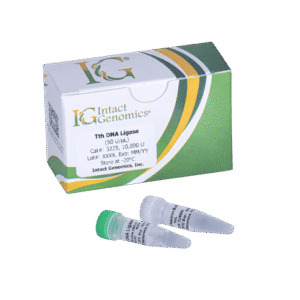
Tth DNA Ligase
Price range: $82.00 through $395.00 Select options This product has multiple variants. The options may be chosen on the product page -
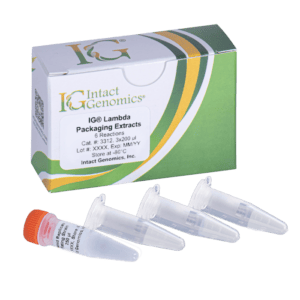
IG® Lambda Packaging Extract
Price range: $545.00 through $1,725.00 Select options This product has multiple variants. The options may be chosen on the product page
Product Description
The purity of this enzyme is >98% homogeneity as determined by SDS-PAGE using Coomassie® Blue staining.
Product Source
E. coli cells with a cloned pseT gene of bacteriophage T4.
Applications
- Labeling 5′-termini of nucleic acids (3, 4)
- 5′-phosphorylation of oligonucleotides, PCR products, other DNA or RNA prior to ligation.
- Phosphorylation of PCR primers.
- Detection of DNA modification by the [32P]-postlabeling assay (5, 6).
- Removal of 3′-phosphate groups (2).
Includes
- T4 Polynucleotide Kinase (PNK)
- 10X T4 PNK Reaction Buffer
Storage Temperature
–20 °C
Storage Buffer
50 mM Tris-HCl, 50 mM KCl, 1 mM DTT, 0.1 mM EDTA,
50% Glycerol, pH 7.5 @ 25 ºC
10X T4 PNK Reaction Buffer
500 mM Tris-HCl, 100 mM MgCl2, 50 mM dithiothreitol, pH 7.5 @ 25 °C
Note
T4 PNK requires ATP for activity, but it is not supplied with ATP because it interferes with radiolabeling reactions.
Unit Definition
One unit of T4 Polynucleotide Kinase converts 1 nmol of 32P from [γ-32P]-ATP into an acid-insoluble form in 30 minutes at 37 °C under standard assay conditions.
Inhibition and Inactivation
- Inhibitors: metal chelators, phosphate and ammonium ions, KCl and NaCl at a concentration higher than 50 mM.
- Inactivated by heating at 70°C for 15 min or by addition of EDTA.
Quality Control Assays
T4 PNK is tested in 5´ phosphorylation of nucleic acids and is free from exo- and endonuclease and RNase activities.
You must be logged in to post a review.
For Radioactive Labeling
Use 1–50 pmol of 5´ termini in a 50 μl reaction containing 1X T4 PNK reaction buffer, 50 pmol of gamma-[32P] ATP and 20 units of T4 PNK. Incubate at 37 °C for 60 minutes.
For Non-Radioactive Phosphorylation
Use up to 300 pmol of 5´ termini in a 50 μl reaction containing 1X T4 PNK reaction buffer, 1 mM ATP and 10 units of T4 PNK. Incubate at 37 °C for 60 minutes.
References
1. Berkner, K.L., Folk, W.R., Polynucleotide kinase exchange reaction, J. Biol. Chem., 252, 3176-3184, 1977.
2. Richardson, C.C., Bacteriophage T4 polynucleotide kinase, The Enzymes (Boyer, P.D., ed.), 14, 299-314, Academic Press, San Diego, 1981.
3. Sambrook, J., Russell, D.W., Molecular Cloning: A Laboratory Manual, the third edition, Cold Spring Harbor Laboratory Press, Cold Spring Harbor, New York, 2001.
4. Current Protocols in Molecular Biology, vol. 1 (Ausubel, F.M., et al., ed.), John Wiley & Sons, Inc., Brooklyn, New York, 3.10.2-3.10.5, 1994-2004.
5. Phillips, D.H., Detection of DNA modifications by the 32P-postlabelling assay, Mutation Res., 378, 1-12, 1997.
6. Keith, G., Dirheimer, G., Postlabeling: a sensitive method for studying DNA adducts and their role in carcinogenesis, Curr. Opin. Biotechnol. 6, 3-11, 1995.
Reviews
There are no reviews yet.