
Sub-Total: $0.00
IG® RPA Master Mix – Lyophilized
IG® RPA Master Mix-Lyophilized is a ready-to-use, freeze-dried premix for rapid and sensitive isothermal DNA amplification.
It enables robust amplification at temperatures as low as 25°C without thermal cycling, with time to detection as short as 5–10 minutes, reduced background, and improved specificity. The lyophilized format simplifies setup, storage, and transportation, making it ideal for laboratory, field, and point-of-need applications..
Custom formats, package sizes and bulk pricing are available upon request.
Price range: $175.00 through $1,668.00
Sale!
Related products
-

Endonuclease IV (Nfo)
Price range: $150.00 through $295.00 Select options This product has multiple variants. The options may be chosen on the product page -
FastAmp® qRPA SYBR Kit
Price range: $290.00 through $2,450.00 Select options This product has multiple variants. The options may be chosen on the product page -
IG® Recombinase Polymerase Amplification (RPA) Kit V2
Price range: $243.00 through $2,125.00 Select options This product has multiple variants. The options may be chosen on the product page -
Bsu DNA Polymerase Large Fragment
Price range: $55.00 through $305.00 Select options This product has multiple variants. The options may be chosen on the product page -
IG Recombineering Electrocompetent Cells
Price range: $245.00 through $765.00 Select options This product has multiple variants. The options may be chosen on the product page
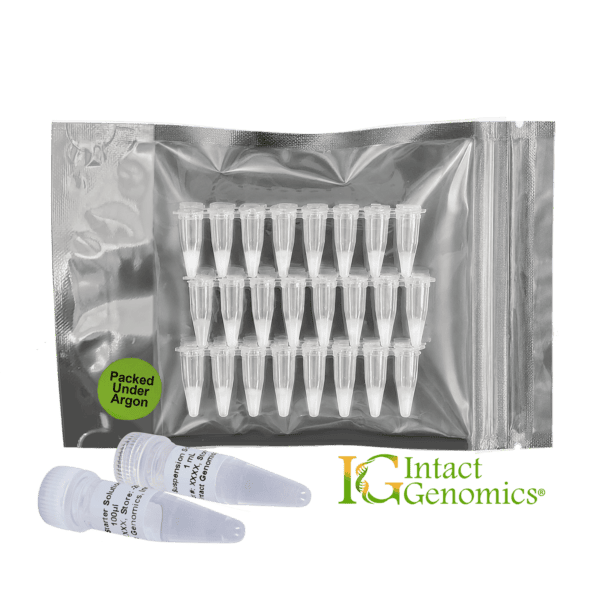
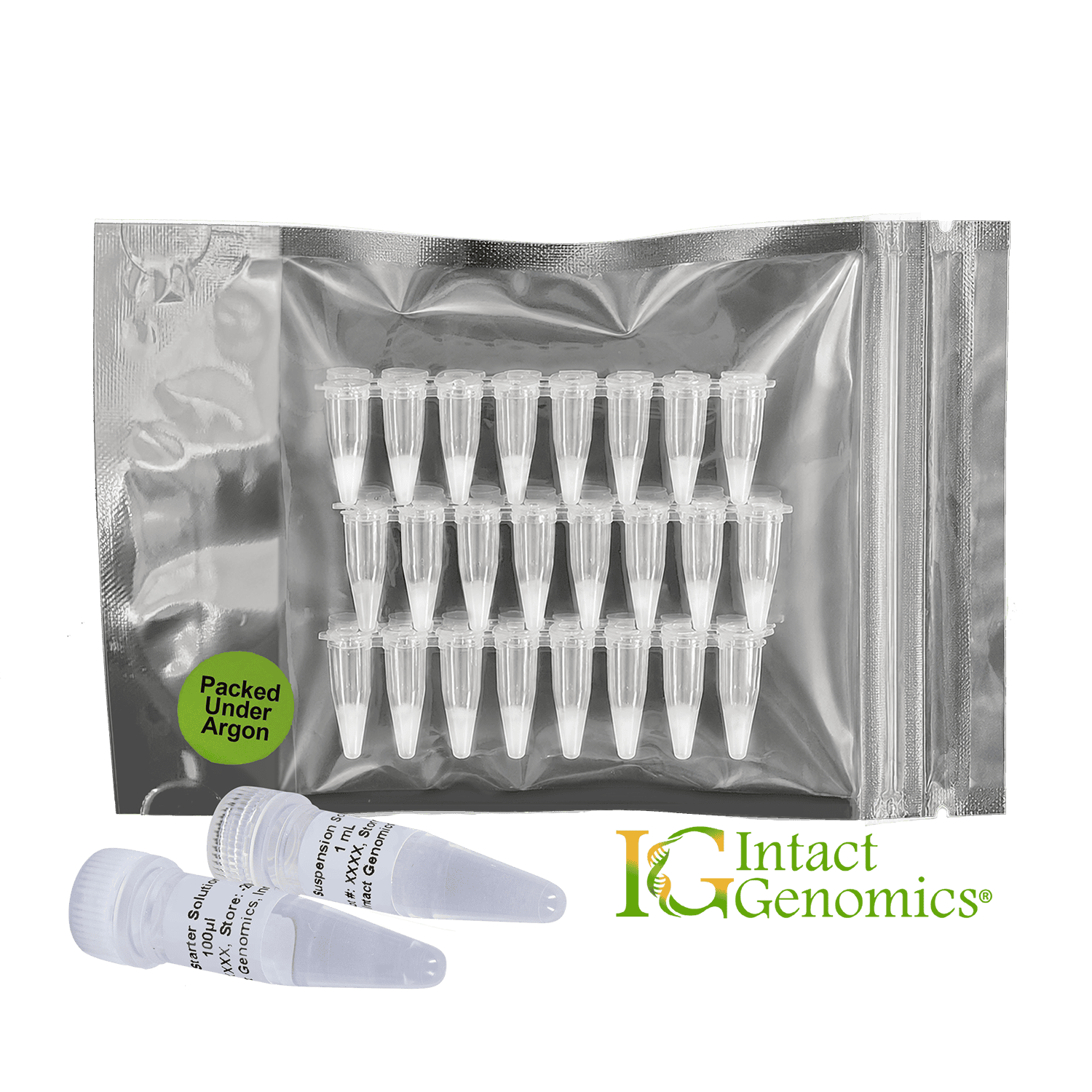
IG® RPA Master Mix-Lyophilized is a ready-to-use, freeze-dried premix for rapid and sensitive isothermal DNA amplification. It contains T4 UvsX recombinase, UvsY recombination mediator, gp32 single-stranded DNA-binding protein, Bsu DNA polymerase, stabilizers, and an optimized reaction formulation.
After reconstitution, the master mix enables robust DNA amplification at temperatures as low as 25°C without thermal cycling. Results may be detected in as little as 5–10 minutes, with a typical reaction time of 10–20 minutes. Its proprietary, patent-pending formulation provides efficient target amplification with reduced background and off-target products, resulting in improved amplification specificity.
The lyophilized format simplifies reaction setup, storage, and transportation king it suitable for routine laboratory use and point-of-need testing. Users need only add primers, template DNA, and the required reaction components.
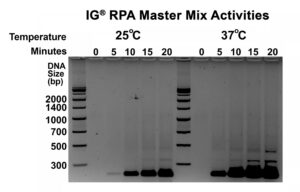
Figure 1: IG RPA Master Mix amplified DNA in 10 minutes at 25°C, in 5 minutes at 37°C.
Key Features:
• Rapid isothermal DNA amplification at 25 °C
• Results in as little as 5–10 minutes
• Low background and reduced nonspecific amplification
• Detection sensitivity below 1,000 copies per reaction
• Convenient lyophilized format
• No thermal cycler required
• Suitable for laboratory and field-deployable assays
Applications:
• Rapid pathogen detection
• Molecular diagnostics research
• Point-of-need nucleic acid testing
• Food and environmental testing
• Agricultural and veterinary testing
• Genotyping and DNA screening
• Development of lateral-flow and fluorescence-based assays
Specifications:
Enzymes: Purified and Nuclease free
Format: PCR tubes and 1.7 mL centrifuge vials
Shipping Condition: Shipped with frozen gel packs
Product Components and Storage Temperature:
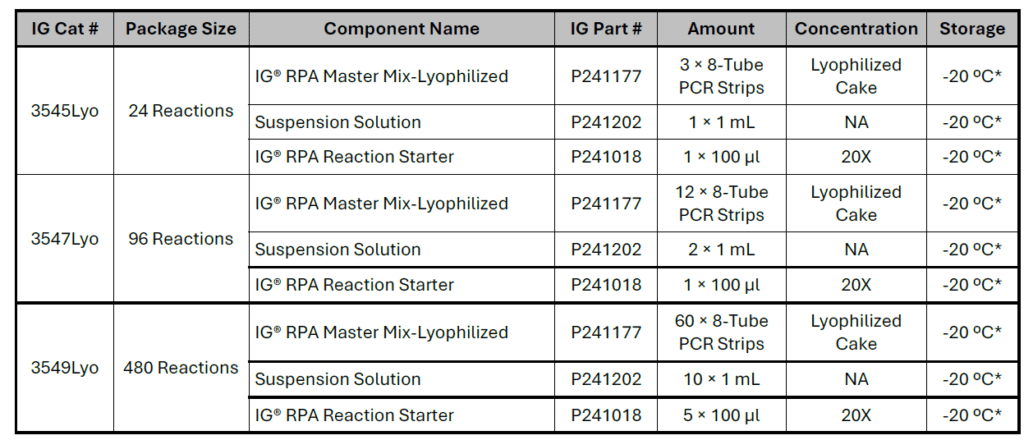
*Store at –20 °C upon receipt. Keep the lyophilized product tightly sealed and protected from moisture. Product parts are stable at 4 ºC for at least for 1 month. Avoid room-temperature long-term storage simply because the product is lyophilized.
Quality Control:
All enzymes thoroughly tested for activity and purity.
All component proteins of the Enzyme Mixture are free from detectable nuclease activities.
RPA activity of each lot is validated to be consistent with prior IG® lots and to be equal to or better than major competitors in the market.
Product quality manage system is ISO 13485 certified.
General Guidelines:
- Setting up the reaction on ice is recommended for consistent performance.
- Mixing is very important to ensure a homogeneous reaction. Mix the reagents well by pipetting before using. Mix by pipetting half of the total volume 10 times.
- Low copy DNA targets may require longer incubation times, warming to 37 ºC, and/or higher template concentration.
- Primers are optimally 25-35 BP in length and do not form either homo– or hetero-dimers. Primers should be checked to minimize secondary structures, e.g., hairpins.
You must be logged in to post a review.
Recombinase Polymerase Amplification (RPA) Technology:
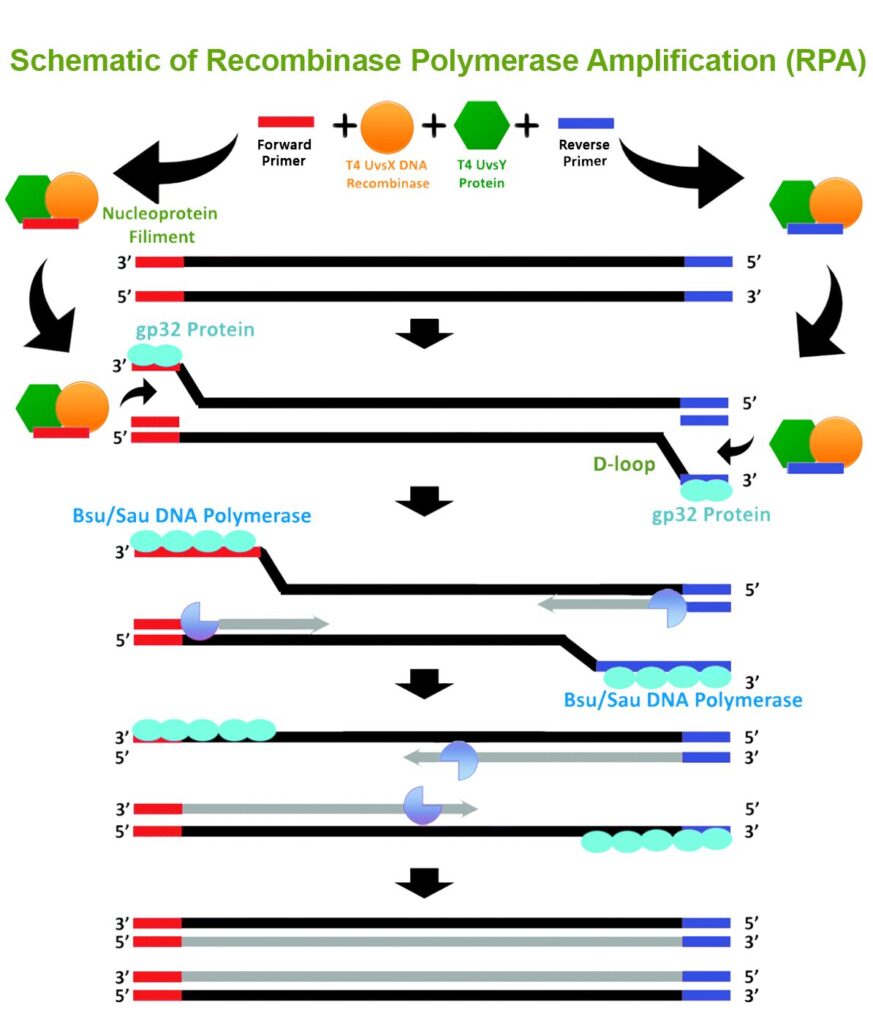
IG® Recombinase Polymerase Amplification Kit Version 2 (IG® RPA V2) amplifies DNA at a single and constant temperature (25 – 42°C) using a recombinase (e.g. UvsX), primers, a single-stranded DNA binding protein (SSB), and a strand displacing DNA polymerase. T4 UvsX is used in combination with its accessory protein, UvsY. The recombinase interacts with the primers to form nucleoprotein filament. This complex can bind with homologous double-stranded DNA through a strand exchange1-3. After the exchange, a single-stranded binding protein, T4 gp32, stabilizes the displaced strand. Finally, Bsu/Sau DNA polymerase extends the DNA from the primers, creating a new complete copy of the template, and amplification can continue like in Polymerase Chain Reaction (PCR).
Q&A:
Q: How long should the RPA incubate?
A: The IG® RPA Master Mix is a very sensitive assay and extending the time may enhance the signal for low DNA copy targets (under 1000 copies). The table below is a flexible guide to help with designing applications:

Q: How important is mixing?
A: The reaction mixture is more viscous than saline solutions. It is advised to mix in the DNA template well by pipetting 10 times , then mix 10 times again after the RPA reaction starter is added.
Q: Should the reagents be kept cold?
A: For best results, set up the RPA reactions on ice and then begin your reaction by moving the reaction vial to ambient temperature or an incubator. Once the start solution is added, the reaction rate is temperature dependent and the reaction is fast at ambient temperature, but very slow on ice. Store any unused IG® RPA Master Mix in a freezer at –20ºC.
References:
1. Cromie GA, Connelly JC, Leach DR (2001) Recombination at double-strand breaks and DNA ends: conserved mechanisms from phage to humans. Mol Cell 8: 1163–1174
2. Michel B, Grompone G, Flores MJ, Bidnenko V (2004) Multiple pathways process stalled replication forks. Proc Natl Acad Sci U S A 101: 12783–12788
3. Liu J, Ehmsen KT, Heyer WD, Morrical SW (2011) Presynaptic filament dynamics in homologous recombination and DNA repair. Crit Rev Biochem Mol Biol 46: 240–270
1. Add the DNA template to the suspension solution.
2. Suspend the dried RPA Master Mix lyophilized cake from one tube/vial using 17 µL of the template + suspension mixture.
3. Add the forward and reverse primers.
4. Add the IG RPA Reaction Starter to initiate the reaction.
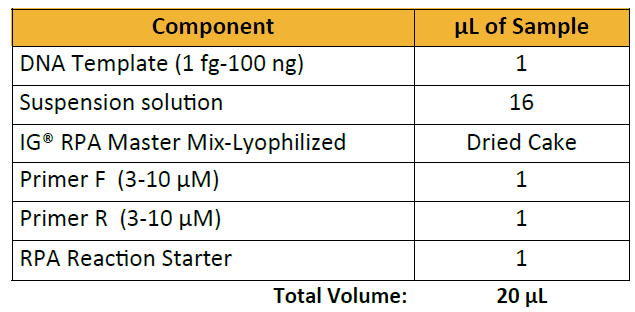
5. Mix half of the total volume 10 times by pipetting, then pulse spin the reaction tube for 1 second.
6. Incubate the tube at 37°C for 5 – 30 minutes or at 25°C for 10 – 45 minutes.
7. (Optional) Purify the DNA via ethanol precipitation. Analyze the DNA by gel electrophoresis on a 1% or 2% agarose gel.
Lyophilized IG® RPA Master Mix Manual
Lyophilized IG RPA Master Mix MSDS
Certificate of Origin – Lyophilized IG® RPA Master Mix
"*" indicates required fields
Reviews
There are no reviews yet.